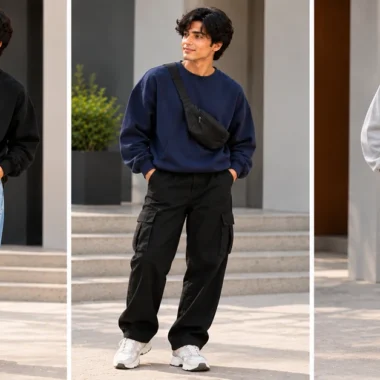
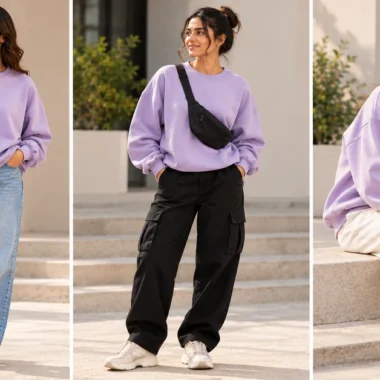
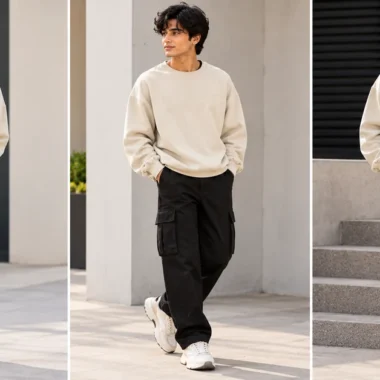
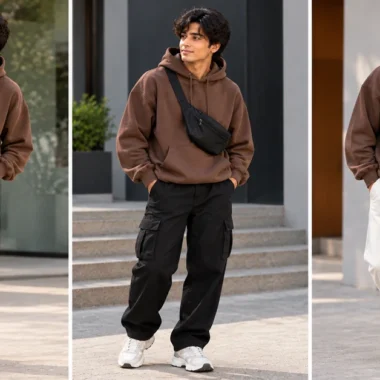
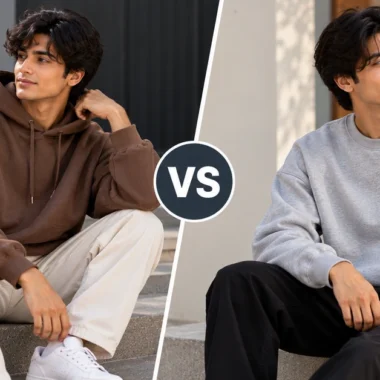
Oversized sweatshirts can look great on shorter men. The goal is not to hide your height or follow rigid fashion rules; it is to choose a relaxed silhouette that feels intentional, comfortable and proportionate to your personal style. Body length, shoulder placement, sleeve volume and trouser shape all influence how an outfit comes together.
This guide explains how to choose an oversized sweatshirt, which measurements to check, how to balance it with jeans and trousers, and how to use colour and layering to create everyday outfits. The suggestions are starting points—not rules about what shorter men can or cannot wear.
What makes an oversized sweatshirt look intentional?
An oversized sweatshirt has extra room through the body and often features dropped shoulders or wider sleeves. That relaxed shape is the point. The challenge is making sure the garment still works with your proportions and does not feel so long or bulky that it restricts movement.
Instead of automatically buying one or two sizes larger, start with the brand’s intended oversized fit and compare the garment measurements with a sweatshirt you already like. The right size depends on the cut, your preferred amount of room and how you plan to style it.
1. Start with the body length
Body length is one of the most useful measurements to check. A sweatshirt that extends far below the hip can visually dominate an outfit, especially when paired with long, loose bottoms. A hem that sits around the hip area may feel easier to balance, but your preferred length and the garment design matter most.
- Check the size chart: compare the listed length with a sweatshirt you already own.
- Consider the bottoms: longer tops can work with streamlined trousers, while a shorter or standard-length top may pair easily with wide-leg pants.
- Think about movement: sit, reach and walk comfortably; the hem should not ride up or bunch awkwardly.
There is no single ideal length for every person. Look for a proportion that feels comfortable and fits the outfit you want to create.
2. Check the shoulder seam and sleeve length
Dropped shoulders are common in oversized designs, so the seam may sit lower than it would on a regular-fit sweatshirt. That is not automatically a problem. What matters is whether the shoulder, sleeve and cuff work together and whether you can move without the garment feeling cumbersome.
Review sleeve measurements as well as body length. If the cuffs cover much of your hands, consider another size or cut. Ribbed cuffs can help keep sleeves in place, but they should not feel tight or uncomfortable.
3. Choose bottoms that balance the top
Straight-fit jeans are a reliable starting point because they balance a roomy sweatshirt without making the outfit look overly fitted. Tapered joggers can create a cleaner line, while cargo trousers add a streetwear feel. Wider trousers can work too; check the overall volume and hem length rather than avoiding them automatically.
- Straight-leg denim: an easy everyday combination with white sneakers or simple trainers.
- Tapered joggers: useful for a relaxed outfit with a little less fabric around the ankles.
- Cargo trousers: pair with a plain sweatshirt and keep the other accessories simple.
- Wide-leg trousers: choose a clean drape and a suitable length so the whole silhouette feels deliberate.
If your trousers bunch heavily around the shoes, try a different inseam or footwear combination. You do not need to avoid loose trousers; just consider how the top, bottom and shoes work together.
4. Pay attention to trouser length and footwear
Excess fabric pooling around the ankles can make an outfit feel less considered. Choose trousers that fall naturally over your shoes, and avoid hems that drag on the ground. A small amount of break at the shoe can look relaxed without overwhelming the outfit.
Low-profile sneakers, simple trainers and clean casual shoes can all work with oversized sweatshirts. Chunkier shoes can also fit a streetwear look, but consider the combined volume of the footwear and trousers. Comfort and suitability for your plans matter more than following a supposed height rule.
5. Use colour to create a coordinated outfit
Colour can connect an outfit and make it easier to repeat pieces. Wearing similar tones through the top and bottom can create a continuous look, while a contrasting sweatshirt can become the main feature. Both approaches can work.
- Neutral base: grey or cream sweatshirt with blue denim or black trousers.
- Dark, coordinated outfit: black or navy sweatshirt with dark jeans and simple footwear.
- Soft contrast: muted blue sweatshirt with cream or beige trousers.
- Accent colour: bottle green or another deeper shade with black, grey or denim bottoms.
Try keeping the outfit to two or three main colours when you want a simple combination. This is a practical starting point, not a strict rule. Patterns and brighter shades can work if they reflect your personal style.
6. Layer without adding unnecessary bulk
Layering can make a sweatshirt outfit more useful in changing weather, but the outer layer should fit comfortably over the sweatshirt. A denim jacket, lightweight overshirt or neatly proportioned coat may be easier to style than an outer layer that is much longer or bulkier than everything underneath.
Check shoulder width, sleeve room and the combined hem lengths. You should be able to move naturally without the sweatshirt bunching heavily inside the jacket. In warmer weather or indoors, a single sweatshirt may be all you need.
7. Try these outfit formulas
Everyday casual
Wear a grey or blue oversized sweatshirt with straight-leg jeans and white sneakers. This simple combination works for errands, casual meetups and relaxed weekends. Add a watch or compact bag if useful, but the outfit does not need many accessories.
Streetwear-inspired
Pair a black sweatshirt with cargo trousers and trainers. Keep the colour palette controlled and check the trouser length so the fabric does not pile up excessively at the shoes. A cap or crossbody bag can complete the look.
Smart-casual relaxed
Try a plain navy or cream sweatshirt with clean, straight-leg trousers and minimal sneakers. Choose a sweatshirt with a tidy neckline and cuffs, and make sure the trousers are suitable for the setting. This is still a casual outfit, but the simpler lines make it feel more polished.
Cool-weather layering
Wear a sweatshirt under a denim jacket or overshirt with jeans and closed shoes. Make sure the outer layer fits over the sleeves and shoulders without pulling. Add warmth according to the weather rather than stacking layers just for appearance.

8. Choose fabric weight for your climate and routine
A heavier sweatshirt may feel more structured and substantial, while a lighter option may be easier to layer or wear indoors. Neither is universally better. Consider your local climate, how warm you tend to feel and whether the sweatshirt will be used for outdoor activities, commuting or casual indoor wear.
If a product lists fabric composition or GSM, use those details to compare similar products, but do not treat one number as a guarantee of quality. Construction, fit, finishing and care instructions also matter.
9. How to shop online without guessing your size
When shopping online, check the garment measurements and fit description before selecting a size. If possible, lay a sweatshirt you like flat and compare its width and length with the listed measurements. Confirm whether the seller lists garment measurements or body measurements, as these are not the same.
Also review fabric composition, colour options, care instructions, shipping details and the return policy. Product images can help you understand the style, but they cannot confirm exact fit or colour on their own.
Browse Fabveda’s men’s heavyweight oversized sweatshirts to compare the available styles and check each product page for current sizes and product specifications.
Common mistakes to avoid
- Automatically sizing up: oversized cuts already include extra room, so use the size chart first.
- Ignoring the hem: body length affects how the sweatshirt works with different trousers.
- Letting trousers bunch excessively: check the inseam and shoe combination.
- Assuming shorter men must avoid wide-leg trousers: focus on the overall silhouette and comfort instead.
- Adding too many bulky layers: make sure each layer fits comfortably and has a clear purpose.
- Choosing only by appearance: check fabric details, care instructions and return terms as well.
Frequently asked questions
Can shorter men wear oversized sweatshirts?
Yes. Focus on the intended fit, body length, sleeve length and how the sweatshirt works with your bottoms. There is no height-based rule that makes oversized clothing off-limits.
Should shorter men size down in oversized sweatshirts?
Not automatically. Oversized styles already have extra room. Compare garment measurements and the fit description with a sweatshirt you own before deciding which size is right.
Which trousers work best with an oversized sweatshirt?
Straight-leg jeans, tapered joggers, cargo trousers and wide-leg pants can all work. Choose the shape and length that balance the sweatshirt and feel comfortable for your routine.
Do monochrome outfits help style an oversized sweatshirt?
Similar tones can create a continuous, coordinated look, while contrasting colours can make the sweatshirt stand out. Choose whichever approach you prefer; neither is mandatory.
How long should an oversized sweatshirt be?
There is no universal ideal length. Compare the garment measurements with your preferred fit and consider how the hem sits with the trousers you wear most often.
Are heavyweight sweatshirts better for shorter men?
Not necessarily. Heavier fabric may hold a more structured shape, while lighter fabric can be easier to layer. Choose based on the cut, climate, comfort and intended use.
Final thoughts
Shorter men can wear oversized sweatshirts confidently by choosing a fit that feels intentional rather than simply going larger. Check the body and sleeve length, balance the top with trousers you enjoy wearing, pay attention to the hem and footwear, and layer for comfort. Use the size chart and product details to make an informed choice, then adapt these ideas to your own style.