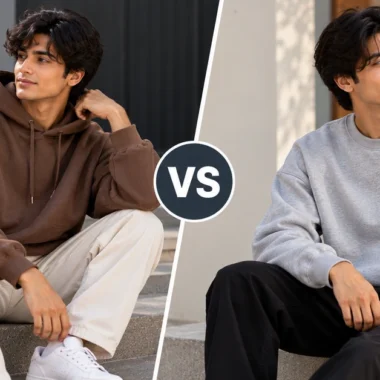
Heavyweight and lightweight hoodies serve different purposes. Neither is automatically better; the right option depends on weather, layering habits, comfort, fabric construction and how you plan to wear it. Fabric weight is useful information, but it should not be the only factor in your decision.
This guide explains the differences between heavyweight and lightweight hoodies, how to compare GSM, what to check in fit and construction, and which option may suit everyday wear, travel or cooler conditions.
Heavyweight vs. lightweight hoodies at a glance
- Heavyweight hoodie: often feels more substantial and may hold a more structured silhouette.
- Lightweight hoodie: often feels less bulky, is easier to layer and may suit mild weather or heated indoor spaces.
- Both: quality depends on fabric composition, construction, fit, finishing and care—not weight alone.
1. What do heavyweight and lightweight mean?
The terms describe the relative weight and feel of a fabric, but they are not universal standards used identically by every brand. One retailer’s “heavyweight” may not match another’s. Compare clear product specifications rather than relying on the label alone.
A heavier fabric may feel thicker or more structured, while a lighter fabric may drape more softly and take up less space. Lining, brushing, knit structure and fibre blend can change how two hoodies of similar weight feel in use.
2. Understand GSM before comparing products
GSM means grams per square metre. It measures fabric mass over an area and can help compare products when the specification is provided. Higher GSM means more fabric mass per area, but it does not automatically mean a hoodie is warmer, softer or more durable.
- Compare similar fabrics: GSM is most useful when the construction is broadly similar.
- Check fibre composition: cotton, polyester and blends can feel and behave differently at similar weights.
- Review construction: knit structure, lining and finishing affect comfort.
- Do not guess missing details: ask the seller if GSM is not listed.
3. When a heavyweight hoodie may suit you
A heavyweight hoodie may appeal if you prefer a substantial feel, a structured oversized silhouette or an extra layer for cooler days. Consider whether it fits comfortably beneath your jacket and whether you will feel comfortable wearing it indoors.
It may feel too warm in humid weather, during active movement or in heated spaces. Weight alone does not guarantee insulation; wind, fabric construction and other layers affect comfort too.
4. When a lightweight hoodie may be more practical
A lightweight hoodie can be useful for mild weather, indoor wear, travel and layering. It may fit more easily beneath a jacket and take up less space in a bag. If you move between warm indoor spaces and cooler outdoors, a lighter layer may be easier to manage.
Lightweight does not automatically mean low quality. Check the fabric, stitching, hood construction, cuffs and product specifications.
5. Compare comfort and fabric composition
Read the fibre composition and care instructions. Cotton-rich fabrics are often chosen for their familiar feel, while polyester or other fibres may be blended in to affect performance, shape retention or care. The exact result depends on the blend and how the fabric is made.
Consider the inside surface too. A brushed interior may feel different from an unbrushed construction. If softness, breathability or ease of care matters to you, look for clear product information rather than assuming fabric weight answers every question.
6. Check fit, hood and cuffs
Fit influences comfort regardless of weight. Compare chest width, body length, shoulder shape and sleeve length with a hoodie you already like. For an oversized cut, the garment should allow movement without feeling unnecessarily long or bulky.
- Body length: consider how the hem sits with jeans, joggers or cargos.
- Shoulders and sleeves: dropped shoulders can be intentional, but cuffs should not interfere with daily tasks.
- Hood construction: check how the hood sits and whether its weight feels comfortable.
- Cuffs and hem: review clear product images and construction details where available.
7. Choose for your routine
For commuting, errands or outdoor time in cooler conditions, you may prefer the feel of a heavier hoodie. For travel, indoor wear or frequent layering, a lighter hoodie may be more flexible. If your routine changes with the weather, owning both can be useful, but it is not essential.
For active movement, consider breathability, freedom of movement and how quickly you may become warm. Neither heavyweight nor lightweight automatically performs better for every activity.
8. Styling ideas for both hoodie weights
Heavyweight hoodie outfit
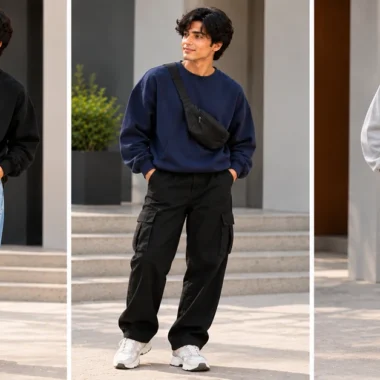
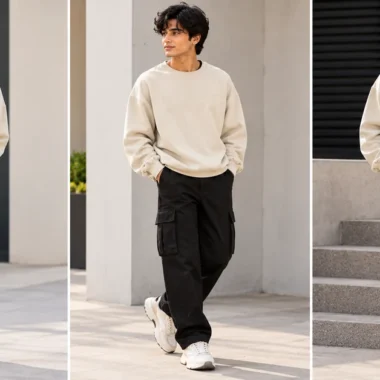
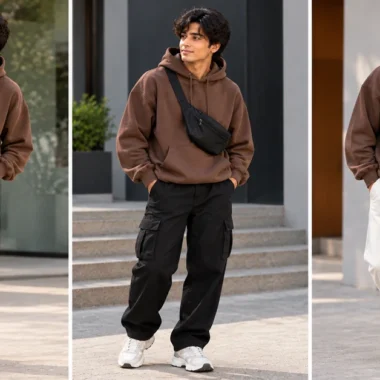
Pair a structured hoodie with straight-leg jeans or cargos and clean sneakers. Check how the trousers fall and avoid excessive bunching at the ankles. A neutral palette makes the outfit easy to repeat.
Lightweight hoodie outfit
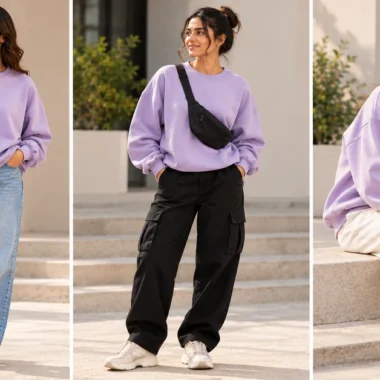
Wear a lighter hoodie with denim, joggers or casual trousers. It can layer beneath a denim jacket, overshirt or coat when the combined fit allows comfortable movement.
Colour choices
Black, grey, navy, cream and white are versatile foundations. Blue, lavender, pink or green can add personality. Choose a shade that works with the bottoms and outerwear you already own, and remember that screens and lighting can affect how colours appear.

9. Care and maintenance
Care requirements vary by fibre blend, fabric finishing, prints and trims. Read the product page and garment label, and follow the recommended washing and drying method. Do not assume every cotton hoodie will shrink by the same amount or that every blend can be tumble-dried.
10. Compare details before checkout
Review the size chart, fabric composition, listed GSM if available, colour options, care instructions, shipping information and return policy. Check the selected size and colour carefully. Product photography can show the style, but it cannot confirm the exact feel, weight or fit.
Explore Fabveda’s men’s heavyweight oversized hoodies and women’s heavyweight oversized hoodies. You can also compare men’s heavyweight oversized sweatshirts if you prefer a crewneck design. Check each product page for current availability and specifications.
Common mistakes when choosing hoodie weight
- Assuming higher GSM means better quality: consider composition, construction, fit and care too.
- Choosing only by season: indoor temperatures, activity and layering habits affect comfort.
- Ignoring the size chart: a good fabric weight cannot compensate for an uncomfortable fit.
- Assuming lightweight means flimsy: weight and construction quality are separate considerations.
- Ignoring care instructions: different fabrics and finishes may need different routines.
Frequently asked questions
Is a heavyweight hoodie warmer than a lightweight hoodie?
It may feel warmer or more substantial, but warmth depends on fabric construction, lining, fit, layers, wind and activity. GSM alone cannot predict how warm a hoodie will feel in every situation.
What GSM is considered heavyweight for a hoodie?
There is no single universal threshold used by every brand. Treat GSM as one comparison point and review the fabric, construction and seller’s description together.
Is a lightweight hoodie better for travel?
It can be easier to pack and layer, particularly when indoor and outdoor temperatures vary. The best choice depends on the destination and your comfort preferences.
Can I wear a heavyweight hoodie in warm weather?
You can, but it may feel too warm depending on the fabric, humidity and activity. A lighter layer may be more comfortable in warm conditions.
Does a heavier hoodie last longer?
Not necessarily. Durability also depends on fibre quality, construction, stitching, finishing, care and frequency of use.
Should I own both heavyweight and lightweight hoodies?
If your weather and routine vary, both can serve different purposes. If you want a smaller wardrobe, choose the type that best suits the conditions and activities you encounter most often.
Final thoughts
Choose a heavyweight hoodie when its substantial feel and structure suit your routine, and choose a lightweight hoodie when easy layering and less bulk are priorities. Compare GSM where available, but also check composition, fit, construction and care instructions. The best hoodie is the one that feels comfortable and works for the way you dress.