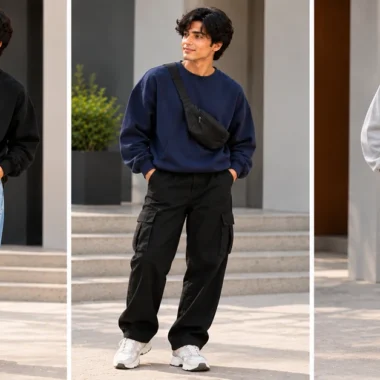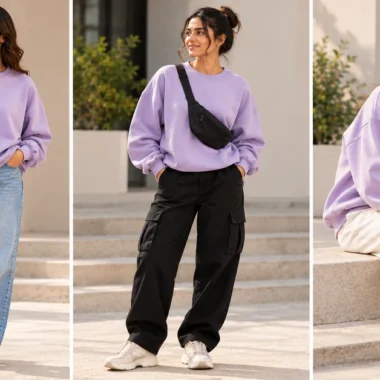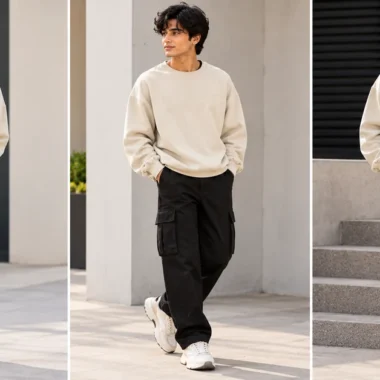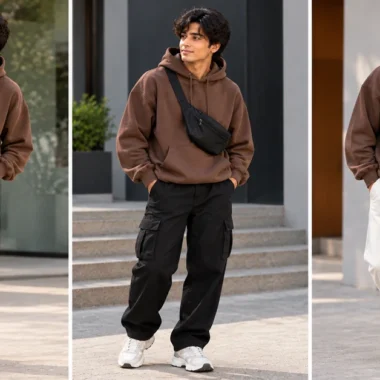
A women’s heavyweight oversized sweatshirt can become a reliable wardrobe staple, but the best one is not chosen by weight or appearance alone. Fabric composition, garment measurements, construction, comfort and care requirements all affect how it feels and how well it suits your routine.
This buying guide explains what to check before ordering a heavyweight oversized sweatshirt, how to understand GSM, which fit measurements matter, and how to assess fabric and finishing details without relying on marketing terms alone.
1. Understand what “heavyweight” means
“Heavyweight” generally describes a sweatshirt made from a heavier fabric than a lightweight or midweight option, but the term is not a universal standard. Product descriptions may use it differently, so look for the listed fabric weight or other clear specifications when available.
A heavier fabric may feel more structured and substantial, while a lighter fabric may be easier to layer or wear in milder weather. Neither is automatically better: consider your climate, how warm you tend to feel and whether you plan to wear the sweatshirt indoors, outdoors or as a layer.
2. Learn how to interpret GSM
GSM stands for grams per square metre. It measures fabric mass per area and can help compare fabric weights when products provide reliable specifications. However, GSM alone does not tell you everything about softness, warmth, durability or quality.
- Compare like with like: GSM is most useful when comparing similar fabric types and constructions.
- Check the composition: cotton, polyester and blended fabrics can feel and behave differently at a similar weight.
- Look at the construction: knit structure, brushing, density and finishing influence the garment’s feel.
- Avoid assuming a number guarantees quality: stitching, fit, shrinkage control and care guidance matter too.
If a product page does not list GSM, do not guess based on a photograph. Review the available specifications or contact the seller for clarification.
3. Check the fabric composition
Read the fibre composition on the product page or garment label. Cotton-rich fabrics are often chosen for their familiar hand feel, while polyester or other fibres may be blended in to affect performance, shape retention or care. The exact result depends on the blend and how the fabric is made.
Do not assume that “100% cotton” or any other single fibre automatically guarantees softness or long life. Fabric quality also depends on yarn, knitting, finishing and construction. Choose based on the information provided and your personal comfort preferences.
4. Use the size chart instead of automatically sizing up
An oversized sweatshirt is designed with extra room, so choosing a larger size than recommended may create sleeves or a hem that feel unnecessarily long. Before ordering, compare the garment measurements with a sweatshirt you already like wearing.
- Chest or body width: helps you estimate how roomy the sweatshirt will feel.
- Shoulder width or drop: affects where the shoulder seam sits.
- Sleeve length: matters for cuff placement and everyday movement.
- Body length: affects how the sweatshirt sits with jeans, leggings, skirts or wide-leg trousers.
Check how measurements are taken because brands may measure garments differently. If you are between sizes, use the chart and fit description rather than assuming that sizing up will always create a better oversized look.
5. Inspect the neckline, cuffs and hem
Ribbed necklines, cuffs and hems help shape a sweatshirt and affect how it sits after repeated wear. Look for clear product images and descriptions showing these areas. The ribbing should suit the intended fit, and the cuffs should feel comfortable rather than restricting movement.
Also consider the neckline shape, shoulder seams and visible stitching. Product photos cannot reveal every construction detail, so use the written specifications alongside the images.
6. Look for consistent stitching and finishing
Seams, stitching and finishing contribute to how a garment looks and holds together. Where close-up images are available, inspect seam alignment, the finish around the neckline and cuffs, and any printed or embroidered details. A clean appearance is useful, but a photo alone cannot prove long-term durability.
Check the seller’s product details and return policy if construction or fit is important to your purchase. If the listing leaves a key question unanswered, seek clarification before ordering.
7. Choose a colour you will actually wear
Black, grey, navy, white and cream are versatile choices that can work with many everyday bottoms. Lavender, pink, baby blue and bottle green add colour when they coordinate with the rest of your wardrobe.
Before buying, imagine at least three combinations using clothes you already own. For example, a grey sweatshirt might work with blue jeans, black trousers and leggings. A lavender sweatshirt may pair with cream trousers, denim and neutral skirts. A useful colour is one you enjoy wearing and can style repeatedly.
8. Consider how you plan to wear it
Your routine should influence the sweatshirt you choose. For commuting or errands, look for a comfortable fit that allows you to move easily. For layering, check that the sleeves and body fit under your jacket without bunching. For lounging, softness and ease of movement may be more important than a structured silhouette.
Think about the weather too. A heavyweight sweatshirt can be useful in cooler conditions, but warmth depends on fabric, layers, wind and temperature. It may feel too warm in humid weather or heated indoor spaces.
9. Check care instructions before buying
Care requirements vary with fibre composition, fabric finishing, prints and trims. Read the product’s washing and drying instructions and follow the garment label once it arrives. Do not assume that every cotton sweatshirt will shrink by the same amount or that every blend can be tumble-dried.
If you want to maintain the original fit and colour, use the recommended care routine and avoid high-heat treatment unless the instructions allow it.

10. Compare product details before checkout
Before adding a sweatshirt to your basket, review the available size, colour, fabric composition, garment measurements, care instructions, shipping information and return policy. Check that the selected variant matches the colour and size you intend to buy.
Browse Fabveda’s women’s heavyweight oversized sweatshirts to compare current styles and the specifications listed on each product page. You can also explore the broader women’s collection for coordinating wardrobe basics.
Common buying mistakes to avoid
- Choosing by GSM alone: consider composition, construction, fit and care too.
- Sizing up without checking measurements: oversized designs already include extra room.
- Assuming photos show exact colour: screens and lighting can change how shades appear.
- Ignoring the care label: care needs can differ between fabrics and finishes.
- Confusing weight with warmth or quality: these depend on more than one specification.
Frequently asked questions
What should I check before buying a women’s heavyweight oversized sweatshirt?
Review fabric composition, GSM if provided, garment measurements, construction details, colour availability, care instructions and the seller’s return policy.
Does higher GSM always mean a better sweatshirt?
No. GSM measures fabric mass per area, not overall quality. Composition, knitting, finishing, stitching and fit also influence how a sweatshirt feels and performs.
Should I size up for an oversized sweatshirt?
Not automatically. Check the size chart and fit description because an oversized cut already includes extra room. Compare garment measurements with a sweatshirt you own if possible.
Is a heavyweight sweatshirt suitable for every season?
It may be useful in cooler weather or as a layer, but comfort depends on the fabric, your activity and local conditions. A lighter option may be more practical in warm or humid weather.
How can I help a sweatshirt keep its shape?
Follow the care label, use the recommended washing and drying method, and avoid high heat unless the instructions allow it. Results vary by fibre composition and construction.
Final thoughts
The best women’s heavyweight oversized sweatshirt is one that fits the way you want, feels comfortable, suits your climate and works with your wardrobe. Compare the measurements and fabric details, inspect construction where possible, and treat GSM as one useful specification—not the only measure of quality.