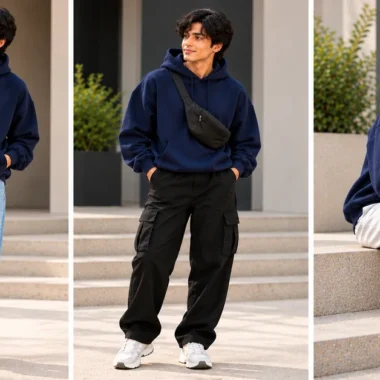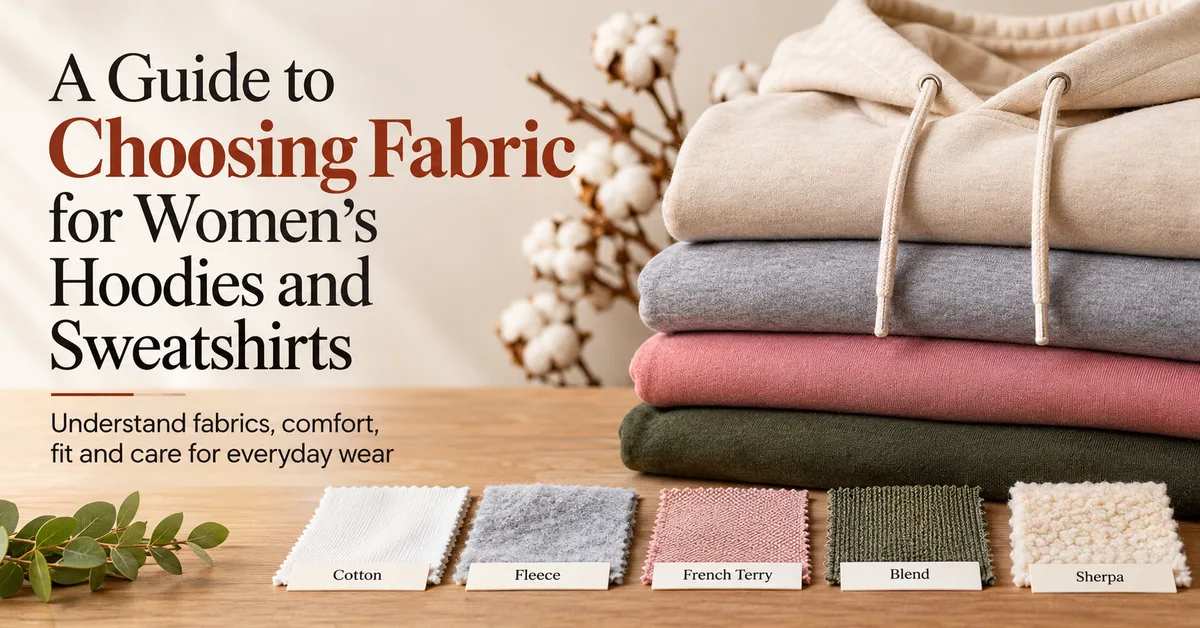
A monochrome outfit builds a look around one colour family. You do not need to wear the exact same shade from head to toe: combining lighter and darker tones, different fabrics and thoughtful proportions helps each piece stand out while the overall outfit feels coordinated. A women’s sweatshirt is a useful starting point because it works with jeans, trousers, skirts and relaxed everyday layers.
1. Choose a colour that fits your wardrobe
Start with a sweatshirt in a colour you already enjoy wearing. Grey, black, cream, beige, navy and muted green are easy to build around, but monochrome styling can use any colour family. If you are new to tonal outfits, choose one neutral shade and use the trousers, shoes and outer layer you already own as your starting palette.
2. Mix light and dark tones
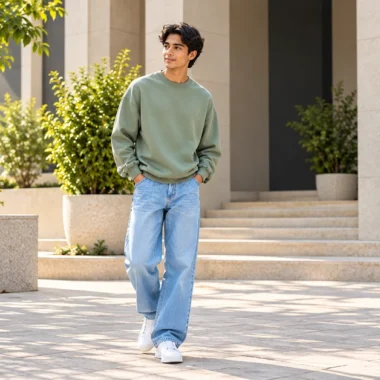
Using several values of one colour creates contrast without breaking the monochrome effect. Pair a light-grey sweatshirt with charcoal trousers, a cream sweatshirt with camel or sand-coloured bottoms, or a navy sweatshirt with deeper blue jeans. If every item is almost identical in shade, the outfit can look flat; small tonal differences help define the pieces.
| Starting sweatshirt | Bottoms to try | Finishing layer |
|---|---|---|
| Light grey | Charcoal trousers or medium-grey joggers | Dark-grey coat or silver-toned accessory |
| Black | Washed-black jeans or charcoal trousers | Black jacket with a different texture |
| Cream | Beige trousers or ecru denim | Tan coat or cream knit layer |
| Navy | Dark-blue jeans or blue trousers | Denim or a deeper navy jacket |
| Olive or muted green | Khaki or deeper green trousers | Olive overshirt or neutral outerwear |
3. Add texture so the outfit does not look flat
Texture is especially useful when the colours are similar. Try a soft sweatshirt with denim, smooth cotton trousers, ribbed knitwear, corduroy or a woven coat. The materials should complement one another in weight and season. For example, a fleece sweatshirt with lightweight trousers may suit indoor or mild-weather use, while a heavier outer layer can add warmth in colder conditions.
4. Balance the silhouette
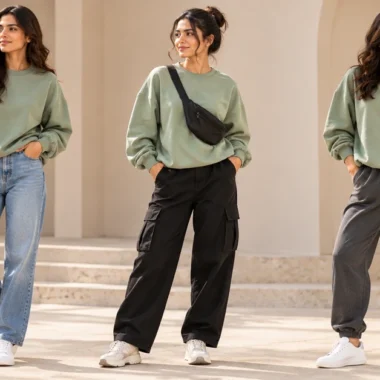
A relaxed sweatshirt can pair with straight-leg jeans, tapered trousers, leggings or a skirt. If both the top and bottom are roomy, check the full outfit from the front and side so the proportions feel intentional. You can let the sweatshirt fall naturally, do a small front tuck where the fabric allows, or add a jacket with a clearer shape. None of these is a strict rule; choose what feels comfortable and suits your style.
5. Keep shoes and accessories within the palette
Choose shoes in a related tone to extend the monochrome effect: grey sneakers with grey layers, cream trainers with a beige outfit, or black boots with an all-black look. A bag in a close shade can make the outfit feel cohesive. Small metallic jewellery or a watch can be a deliberate accent without taking over the outfit.
If you prefer a more relaxed look, a contrasting shoe can work too. Monochrome is a styling approach rather than a strict dress code, so one small accent is fine if you like the result.
6. Try these easy monochrome outfit formulas
- Grey-on-grey: a light-grey sweatshirt, charcoal straight-leg trousers and grey or white sneakers.
- Soft neutrals: a cream sweatshirt, beige trousers and a camel coat or overshirt.
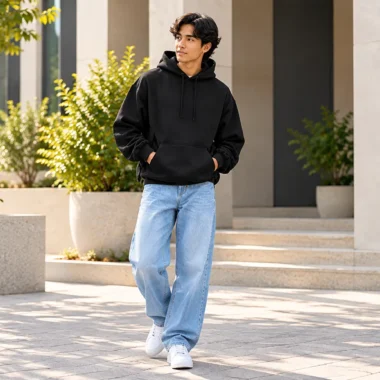
- Black layers: a black sweatshirt, washed-black jeans and black boots, using different textures for depth.
- Blue tones: a navy sweatshirt, blue denim and a darker blue jacket.
- Green tones: an olive sweatshirt, khaki bottoms and a muted green outer layer.
7. Make each piece work on its own
A practical monochrome wardrobe uses pieces that can also be worn with other colours and outfits. Choose a sweatshirt that works with jeans, joggers and a skirt rather than buying every item as a matching set. Before choosing a new piece, compare its colour with garments you already own and check the actual product details for fabric, fit and care information.
Browse Fabveda’s women’s heavyweight oversized sweatshirts for possible starting pieces. Check each listing for its specific measurements and product information.
Common monochrome styling mistakes
- Assuming every item must be an identical shade.
- Using only one texture, which can make a tonal outfit look flat.
- Ignoring fit and proportion because the colours coordinate.
- Mixing fabrics that do not suit the weather or intended activity.
- Buying a complete matching set before checking how each item works with the existing wardrobe.
Quick monochrome outfit checklist
- Choose one main colour family.
- Use two or three related shades to create definition.
- Mix textures while keeping fabric weight appropriate for the season.
- Check the full silhouette and comfort when moving.
- Coordinate shoes and accessories without forcing an exact match.
- Make sure each piece can be worn in other outfits too.
Frequently asked questions
Does a monochrome outfit have to be one exact colour?
No. It usually uses several shades within the same colour family. Tonal differences create depth while keeping the outfit visually connected.
Can I wear a sweatshirt and joggers in a monochrome outfit?
Yes. Choose matching or related tones and vary the texture or shade slightly so the outfit has definition. Check that the fit is comfortable for your plans.
How can I make a neutral monochrome outfit more interesting?
Mix materials such as fleece, denim, cotton, ribbed knit or a woven coat. Different textures and a light-to-dark tonal contrast add interest without introducing another strong colour.
Can I add a contrasting bag or shoes?
Yes. A small accent can work well if you want it. Keeping most of the outfit within one colour family is enough to preserve the monochrome effect.
Are monochrome outfits suitable for everyday wear?
Yes. Sweatshirts, jeans, joggers, trousers and simple outerwear can make tonal outfits practical for casual plans. Choose fabrics and layers for the weather and your routine.
Keep the look simple and personal
The easiest monochrome outfit starts with a sweatshirt you like, adds related shades and uses texture and fit to create interest. Build around clothes you already wear, try the full combination together and adjust the details until it feels comfortable and natural.