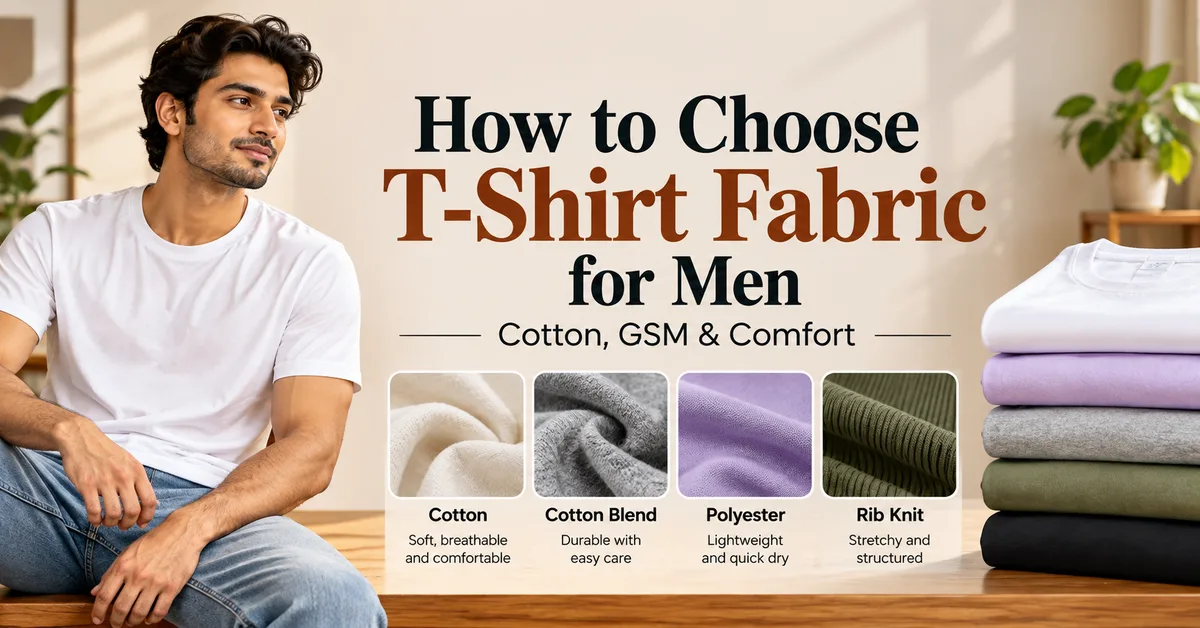
The fabric of a T-shirt affects how it feels, how it drapes, how well it handles heat and how long it stays looking good. Two T-shirts can look similar on a hanger but feel very different when worn. Understanding fabric composition, knit structure and weight can help you choose a T-shirt that suits your routine.
This guide explains how to choose T-shirt fabric for men, what common fabric terms mean and which features to check before buying.
1. Cotton: A Versatile Everyday Choice
Cotton is popular for everyday T-shirts because it is soft, breathable and comfortable against the skin. It works well for casual wear, travel and layering. The exact feel depends on the yarn, knit, finishing and fabric weight, so not every cotton T-shirt will feel the same.
Look for a smooth surface, even stitching and a fabric that feels comfortable rather than rough or overly stiff. Follow the garment’s care label to help maintain its shape.
2. Combed and Ring-Spun Cotton
Some cotton T-shirts use combed or ring-spun yarns. Combing removes shorter fibres and impurities, while ring spinning is a yarn-making method that can produce a smoother, stronger yarn. These terms can indicate a refined feel, but overall quality still depends on construction and finishing.
3. Cotton-Polyester Blends
Cotton-polyester blends combine the comfort of cotton with some of polyester’s practical properties, such as shape retention and faster drying. They can be useful for frequent wear, travel or activities where easy care matters. The feel and performance vary with the blend ratio and fabric construction.
Check the fibre percentages on the product label instead of assuming every blend behaves identically.
4. Jersey Knit and Other T-Shirt Constructions
Most everyday T-shirts use a knit fabric, commonly single jersey. Jersey is flexible and comfortable, making it suitable for casual tops. Rib-knit fabrics are often used for neckbands because they stretch and help the neckline recover its shape.
Fabric composition tells you which fibres are used; knit construction tells you how the fabric is made. Both affect how a T-shirt feels and performs.
5. What Does GSM Mean?
GSM stands for grams per square metre and measures fabric weight. It can help you compare lighter and heavier T-shirts, but it does not independently determine quality.
- Lightweight fabric: often feels airy and can be useful in warm weather, though some light fabrics may be more transparent.
- Midweight fabric: a versatile option for regular everyday use and layering.
- Heavyweight fabric: often feels more substantial and may hold a structured silhouette, depending on the knit and finish.
There is no single ideal GSM for everyone. Consider climate, fit, opacity, drape and how you plan to wear the T-shirt. Our guide to heavyweight vs. regular T-shirts explains the trade-offs in more detail.
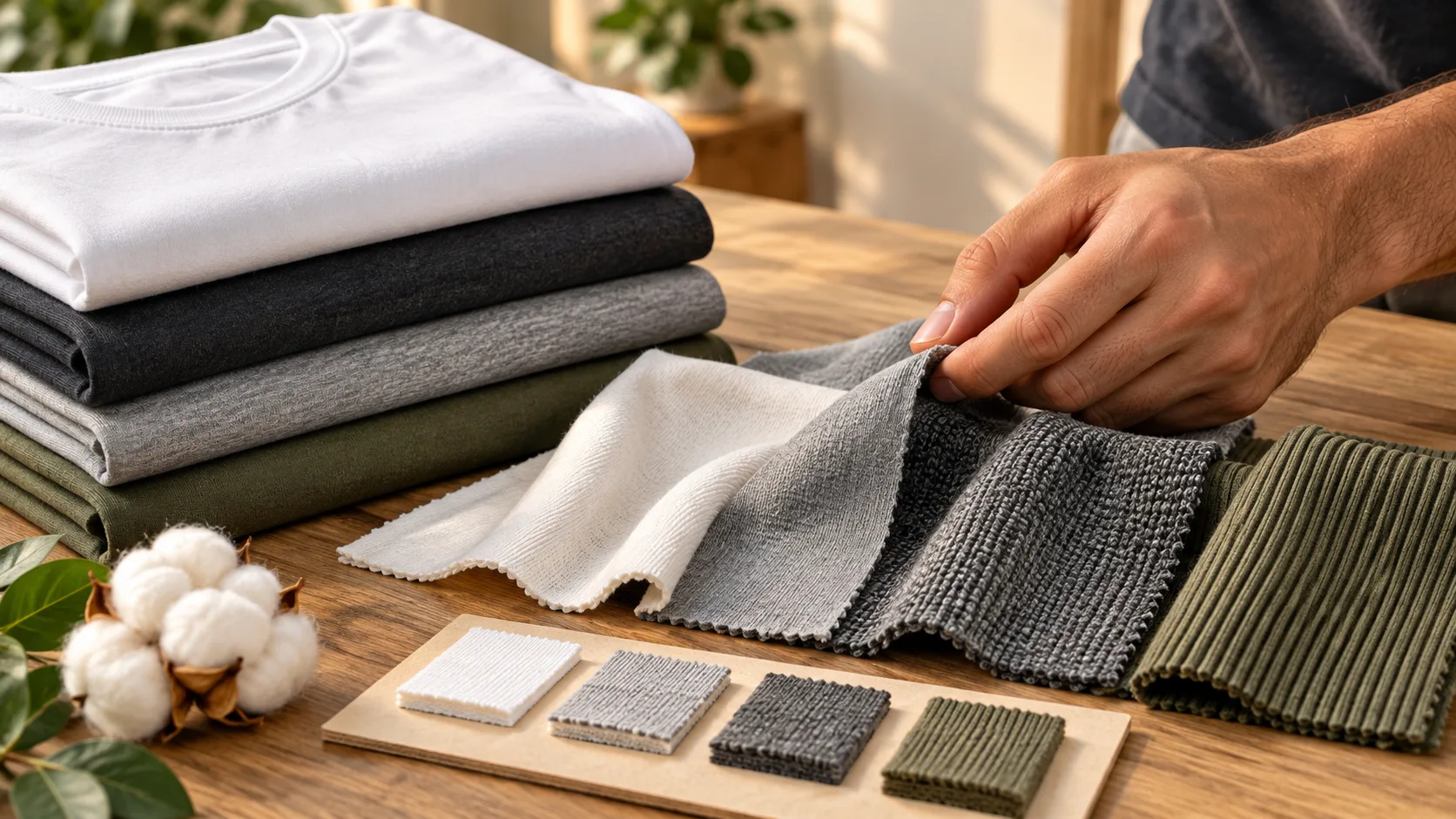
6. Choose Fabric for Your Climate and Routine
| Your priority | What to consider | Check before buying |
|---|---|---|
| Everyday comfort | Soft cotton or a comfortable blend | Hand feel and stitching |
| Hot weather | Lightweight, breathable construction | Airiness and opacity |
| Frequent washing | A well-constructed fabric with suitable care instructions | Seams, neckline and shrinkage guidance |
| Structured look | Midweight or heavyweight knit | Drape and how it holds its shape |
| Travel and easy care | Blends may be worth considering | Drying time and wrinkle behaviour |
7. Check the Fabric Before You Buy
- Read the composition label: confirm whether the T-shirt is cotton, a blend or another fibre.
- Check the opacity: hold lighter colours against a bright background if transparency is a concern.
- Inspect the seams: look for neat stitching and a neckline that lies flat.
- Consider the drape: the fabric should hang in a way that suits the fit you want.
- Review care instructions: choose a garment whose care requirements suit your routine.
8. Fabric Quality and T-Shirt Fit Go Together
A good fabric cannot compensate for a poor fit. Check the shoulder position, sleeve opening, body width and hem length. A heavier fabric can create a more structured silhouette, while a lighter fabric may drape closer to the body. The best option is the one that feels comfortable and works with your preferred style.
For help with proportions, read our guide to choosing the right oversized T-shirt size and our men’s T-shirt buying checklist.
9. How to Care for T-Shirt Fabric
Care instructions vary by garment, so always follow the label first. As a general approach, avoid unnecessarily high wash temperatures, separate colours when needed and do not use more heat than the fabric requires. Remove a T-shirt promptly after washing and reshape it gently if necessary. Proper care can help reduce premature fading, stretching and shrinkage.
Frequently Asked Questions
Which fabric is best for men’s T-shirts?
There is no universal best fabric. Cotton is a versatile everyday choice, while cotton-polyester blends may suit people who prioritise easy care and faster drying. Choose based on comfort, climate and intended use.
Is 100% cotton always better than a blend?
Not always. Pure cotton can feel soft and breathable, while a blend may offer useful care or performance characteristics. Fabric quality, construction and personal preference matter alongside fibre content.
Does higher GSM mean better quality?
No. GSM indicates fabric weight, not overall quality. A well-made lightweight T-shirt can be excellent, just as a poorly constructed heavyweight T-shirt can disappoint.
Why does a T-shirt shrink?
Some fabrics, particularly cotton-rich ones, may shrink depending on how they were made and how they are washed and dried. Follow the care label and avoid excessive heat where the instructions advise against it.
Choose for Comfort, Not Just a Label
When comparing T-shirts, look beyond a single claim such as “premium cotton” or a high GSM number. Check the fibre composition, construction, feel, fit and care instructions together. That combination gives you a more reliable picture of whether a T-shirt suits your everyday needs.
For more practical style advice, explore Fabveda’s plain T-shirt styling guide for men.