Choosing the right size in a women’s oversized hoodie is about finding the balance between a relaxed silhouette and comfortable movement. Buying a size up does not always create the intended oversized look: some hoodies are already cut with extra room, dropped shoulders and longer sleeves. Comparing garment measurements and checking the brand’s fit notes can help you choose with more confidence.
This guide explains which measurements matter, how to compare a hoodie with one you already own, and how to choose a length and fit that works with your usual outfits. Because sizing differs by brand and design, use the product’s own size chart whenever it is available.
1. Understand What “Oversized Fit” Means
An oversized hoodie is designed to have more room through the body and often has dropped shoulder seams or fuller sleeves. The intended shape should look relaxed rather than simply too large. A good fit lets you lift your arms, sit comfortably and move without the hem or sleeves constantly getting in the way.
Before choosing a size, decide on the silhouette you prefer. A slightly relaxed fit is easy to layer and style with jeans, while a very loose fit creates a more pronounced streetwear look. Neither is automatically better; the right choice depends on your comfort and the outfits you want to wear.
2. Measure a Hoodie You Already Like
The easiest way to compare sizes is to measure a hoodie you already own and enjoy wearing. Lay it flat on a level surface, smooth the fabric without stretching it, and take measurements in the same way the retailer describes its size chart. Compare the results with the garment measurements—not just a generic S, M or L label—when those measurements are provided.
- Chest or body width: Measure straight across the garment below the armholes. Check whether the chart lists the flat width or the full circumference.
- Body length: Measure from the highest shoulder point beside the neckline down to the hem, following the brand’s instructions.
- Sleeve length: Check where the measurement begins; some charts measure from the shoulder seam, while raglan sleeves may be measured from the neckline.
- Shoulder width: If shoulder seams are present, compare the distance between them. Dropped shoulders can make this measurement look wider by design.
Measurement methods vary between retailers, so do not compare numbers unless they refer to the same points. If a product page provides only body measurements rather than garment measurements, follow its sizing guidance instead.
3. Choose the Right Body Width
Body width affects how roomy the hoodie feels across your chest and waist. If you want a neat oversized look, choose enough space for comfortable movement without excessive fabric bunching around the sides. If you prefer a looser streetwear silhouette, you may want more width, but make sure the garment still sits securely on your shoulders and does not feel cumbersome.
Think about what you will wear underneath. A T-shirt usually needs little extra room; a thicker layer may require more space. Do not automatically size up for layering—first check whether the hoodie is already designed with a roomy cut.
4. Check the Body Length
Length changes the overall proportions of an outfit. A shorter or hip-length hoodie can work well with high-rise jeans, while a longer hoodie can provide more coverage with leggings. With skirts or wide-leg trousers, consider where the hem falls so the outfit feels balanced rather than unintentionally bulky.
Check the length while standing and, if possible, sitting. The hem should feel comfortable and should not ride up excessively when you move. If you are between sizes, compare the listed body length with a hoodie you already like before deciding which size to choose.
5. Review Sleeve Length and Shoulder Drop
Oversized hoodies often have dropped shoulders and longer sleeves. A sleeve that reaches the base of the thumb or covers part of the hand may be part of the intended style, but it should not prevent you from using your hands comfortably. Ribbed cuffs can help keep sleeves in place, although cuff tightness varies by garment.
Look at the product photos and size chart together. If the model’s sleeves look long, that may reflect the design rather than a sizing error. Compare the sleeve measurement with your preferred fit and check whether the garment uses a standard shoulder seam or a raglan construction.
6. Should You Size Up or Choose Your Usual Size?
Start with the brand’s size chart and the fit description. If the hoodie is labelled oversized or relaxed, your usual size may already provide the intended shape. Sizing up can add more body width and sleeve length, but it may also make the shoulders, cuffs and hem feel less secure.
- Choose your usual size when the garment is already cut oversized and the chart matches your preferred measurements.
- Consider sizing up only if the measurements suggest you need more room or you deliberately want a much looser silhouette.
- Consider sizing down only if the chart and fit notes indicate the oversized cut will be roomier than you want.
These are general guidelines, not a substitute for a specific product’s size chart. When the fit is uncertain, check the retailer’s exchange policy before ordering.
7. Match the Fit to Your Outfit
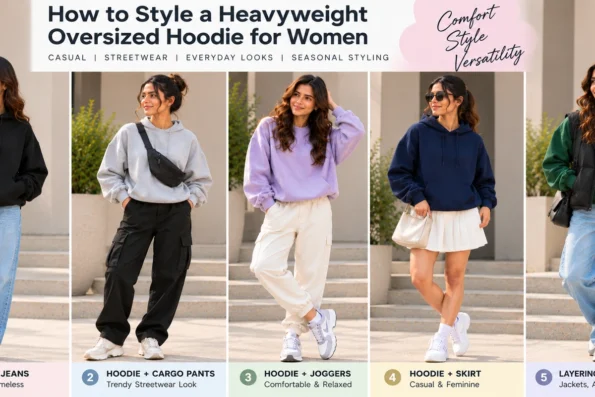
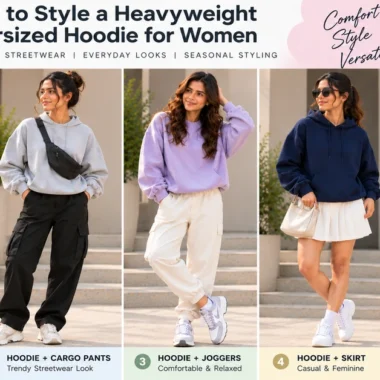
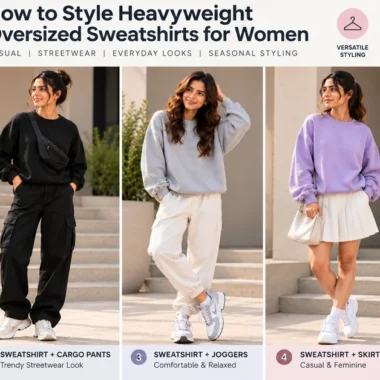
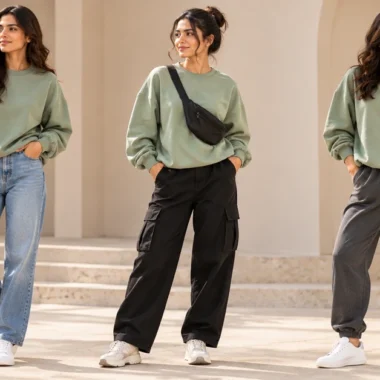
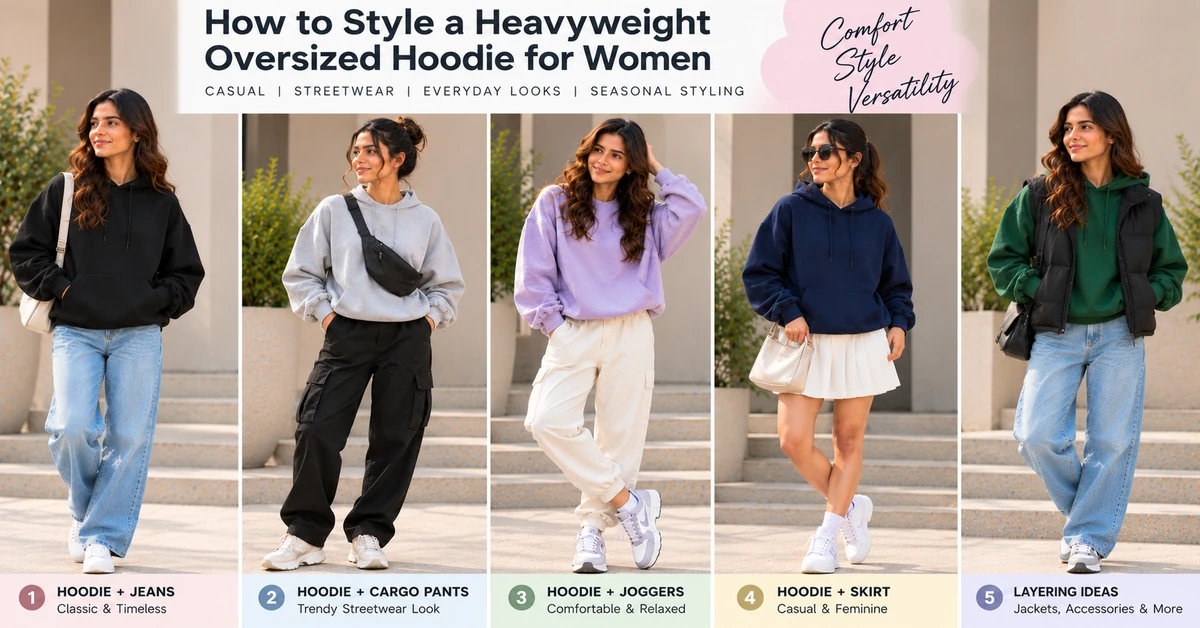
- With straight-leg jeans: A relaxed hoodie creates an easy everyday outfit. Choose a hem length that sits comfortably around the hip.
- With leggings: A longer hoodie may provide the coverage you prefer. Check the length rather than relying only on the size label.
- With wide-leg trousers: A roomy hoodie can create a relaxed silhouette; keep the proportions intentional and choose footwear that works with the trouser length.
- For layering: Leave enough space for the clothing underneath and for a jacket to sit comfortably over the hoodie.
There is no single ideal length or amount of volume for everyone. Use your own comfort, the garment measurements and the outfit you plan to wear as the main guides.
8. Common Sizing Mistakes to Avoid
- Buying a larger size without checking measurements: The hoodie may already be oversized, so sizing up can make sleeves or length excessive.
- Using another brand’s size label as a guarantee: Sizing and fit blocks vary between brands and styles.
- Ignoring sleeve construction: Raglan sleeves and dropped shoulders are measured differently.
- Choosing by model photos alone: The model’s height, size worn and styling can affect how the hoodie appears.
- Overlooking care instructions: Follow the label to help maintain the garment’s fit and appearance after washing.
9. What to Check Before Buying
Before placing an order, review the size chart, garment measurements, fit description, model information if provided, fabric composition and care instructions. Confirm whether the listed measurements refer to the body or the garment, and check the return or exchange terms if fit is uncertain.
Explore Fabveda’s women’s heavyweight oversized hoodies and review the details on each product page before choosing your size.
Frequently Asked Questions
Should I buy my normal size in an oversized hoodie?
Often, yes. If the design is already cut oversized, your usual size may provide the intended relaxed shape. Check the product measurements and fit notes before deciding.
How do I measure an oversized hoodie at home?
Lay a hoodie you like flat and measure body width, body length and sleeve length according to the retailer’s measurement method. Compare like-for-like measurements with the product chart.
How long should a women’s oversized hoodie be?
That depends on your preferred coverage and how you plan to style it. Compare the listed length with a hoodie you already own and consider how the hem will work with jeans, leggings or skirts.
Is it better to size up for a baggy look?
Not always. Some hoodies already have extra width, dropped shoulders and longer sleeves. Sizing up may make the sleeves or body too long, so use the measurements first.
What if I am between two sizes?
Compare the chest or body width and length with a garment you like, then read the brand’s fit notes. Choose based on your preferred amount of room and check the exchange policy if available.
Final Thoughts
The right size in a women’s oversized hoodie should feel roomy without making movement difficult. Compare body width, length, sleeve measurements and shoulder construction, then use the specific product’s size chart instead of relying on the size label alone. A few minutes spent checking measurements can help you choose a fit that feels comfortable and works with your wardrobe.